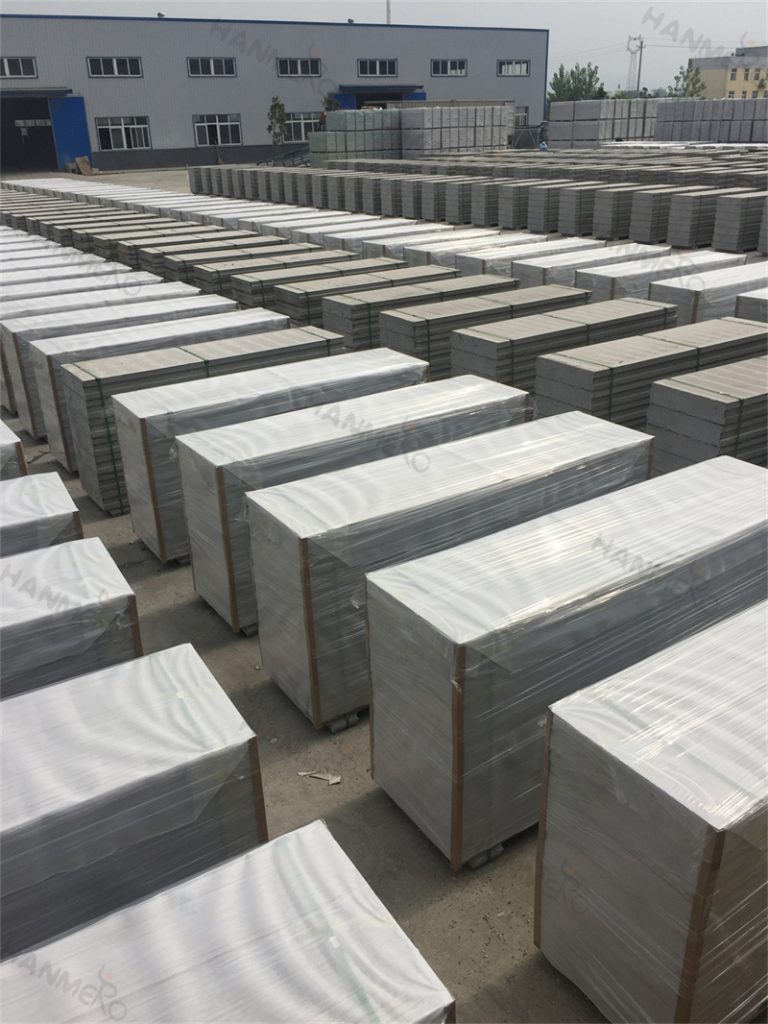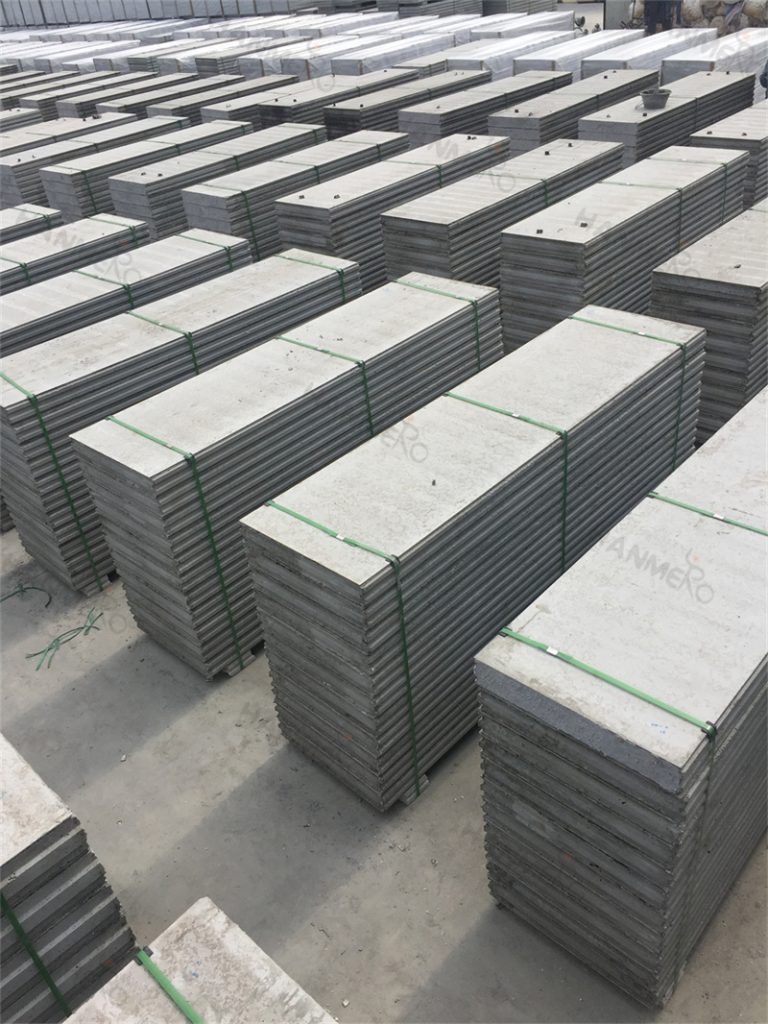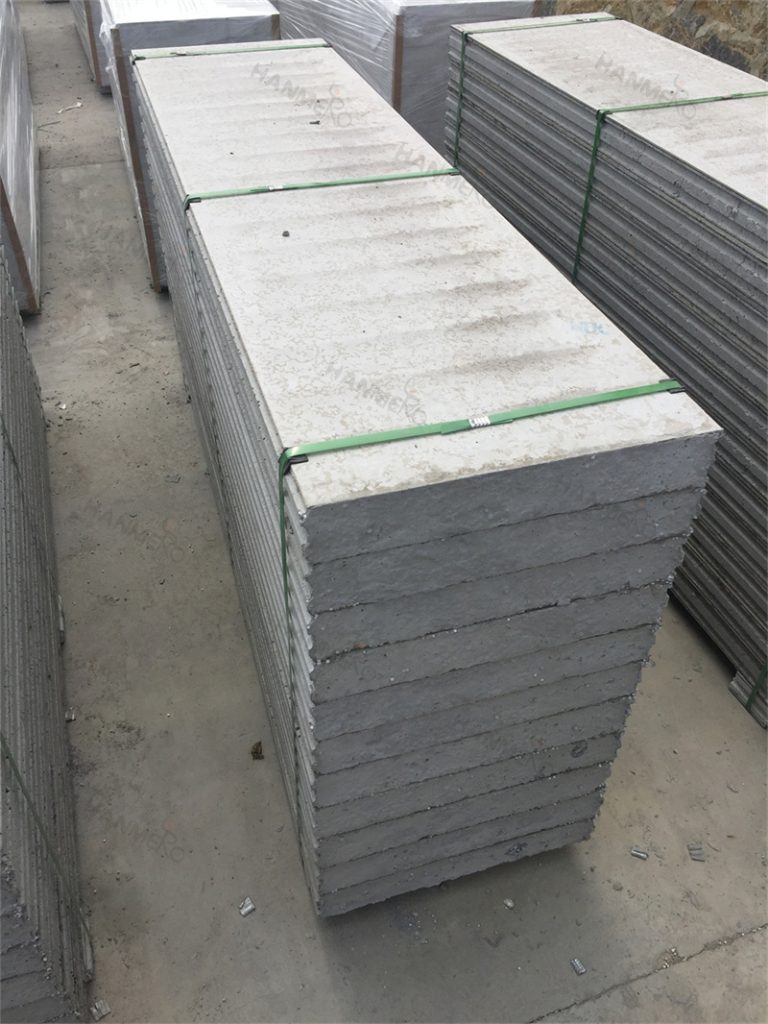
Many factories such as food processing plants, textile mills, washing factories and factories located in tropical or rainy regions have to deal with long term high humidity environments. Traditional wall materials such as ordinary gypsum board, aerated concrete and even clay bricks are prone to water seepage, mold growth, wall peeling and structural softening after working in these humid conditions for a few years. The EPS Cement Sandwich Panel has excellent moisture proof performance, perfectly adapting to all kinds of humid factory environments.
The main raw materials of EPS Cement Sandwich Panel are fully inorganic cement based materials, so the panel itself has a very low water absorption rate of less than 8%. This means even if the wall is often exposed to water vapor, splashing water or high humidity air, it will not absorb a large amount of water and become soft, heavy or deformed. Unlike porous aerated concrete walls that will become damp all the way to the other side after long term contact with water, the dense structure of the EPS Cement Sandwich Panel can effectively block the penetration of water and water vapor, keeping the other side of the wall completely dry.
For food processing factories that have strict hygiene requirements, the moisture proof feature of EPS Cement Sandwich Panel is especially valuable. The smooth, non porous surface of the panel will not accumulate dust, oil or food residue easily, and there is no gap for mold or bacteria to grow. Workers can clean and disinfect the wall surface directly with water and food grade detergent, which fully meets the strict food hygiene and safety standards. Many food factories that used traditional walls before found that mold spots would grow on the wall corner near the washing area after 2 years of operation, and it was very difficult to remove them completely. After switching to EPS Cement Sandwich Panel, this mold problem was completely eliminated.
For factories located in southern coastal areas with high humidity and heavy rainfall, the panel can also be used as the interior side of the exterior wall to prevent moisture from seeping into the workshop. This keeps the production environment dry, protecting precision production equipment, electronic components and raw materials that are sensitive to moisture from getting damp and damaged. The long service life of the panel means factories do not need to replace the wall frequently due to moisture damage, greatly reducing long term maintenance cost and avoiding unnecessary production shutdown caused by wall renovation.